Showing posts with label Railways. Show all posts

Tuesday, 4 February 2014

The Great Central Railway Winter Steam Gala 2014

For many years now, I have been attending this event which this year was spread over Friday, Saturday and Sunday of the 24th, 25th, and 26th. of January.


The format is that the GCR utilize their home based fleet together with a number of visiting guest locomotives to run a regular passenger service which is backed up by the same loco’s running on additional freight and Traveling Post Office workings. In addition there are turntable demonstrations at Quorn and Woodhouse station.


Something for everybody then and a good day out for all. 


The visiting Loco’s were 


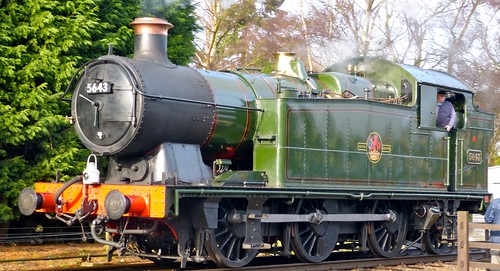
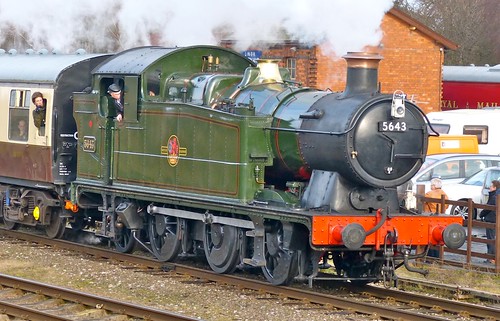
Great Western Railway (GWR) class 56XX 0-6-2T No. 5643


Built in the mid 1920’s, the ’56’ were developments of the Rhymney Railway classes ‘M’ and ‘P’. 


The railways of South Wales at that time moved vast quantities of coal over fairly short distances and this type of loco proved ideal.


The same qualities can also be put to use on preserved lines swapping coal wagons for passenger coaches.


Built in 1925, 5643 is one of 9 of the class currently preserved. 


Having worked all its life in South Wales, it was withdrawn in 1963 went for scrap to the now famous ‘Woodhams’ scrapyard at Barry.


After several moves in preservation the loco moved to Cumbria and is now owned by the The Furness Railway Trust.
 

P1080520


P1080495


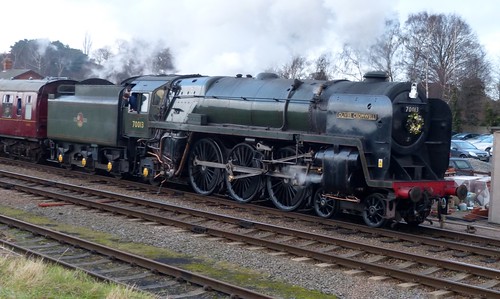
British Railways (BR) Standard class 7 4-6-2 No. 70013 ‘Oliver Cromwell’. Also known as the ‘Britannia’ class.


Only two of the 55 loco’s built between 1951 and 1954 survive. The other one being No. 70000 ‘Britannia’ itself.


After withdrawal after a very short working life 70013 became part of the National Railway Museums collection.


After spending some years at Bressingham Steam & Gardens in 2004 it was announced that the loco was to be returned to steam in time for the 40th. anniversary of the ending of steam.


It re entered service in 2008 and since that time has made regular public appearances.


During the gala a wreath was carried on the smokebox door in memory of Mick Pickering a GCR driver who passed away earlier in the month.

P1080670


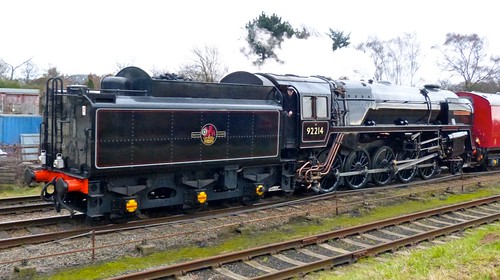
British Railways (BR) Standard class 9F 2-10-0 No. 92214 ‘Cock ‘O the North’ a name it did not carry in service.


One of 9 surviving loco’s it did not carry the lined BR black livery in service either and although some people do not like loco’s carrying non authentic liveries, I think it looked gorgeous.


After the gala it was announced that 92214 is to stay on the GCR.


Designed and built in the 1950’s the 9F’s were destined to be the last steam loco’s built for BR. Its classmate 92220 being the very last.

P1080705


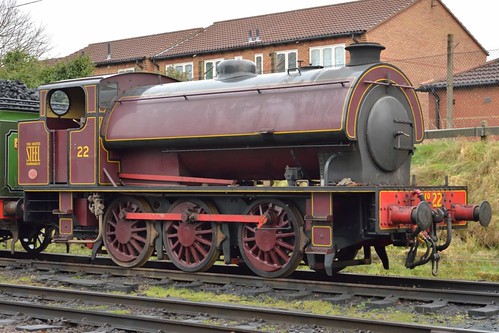
Hunslet 0-6-0T Austerity No 22. 


Unfortunately failed at Loughborough on the Friday and was withdrawn from the gala.


Designed for the Ministry of Supply for use in wartime, the Austerity’s were built in their hundreds. 


After the war, surplus loco’s were sold off. The LNER bought 75 and gave them the designation of J94.


They continued in BR service until the mid 1960’s most famously on the Cromford & High Peak Railway.


No.22 was built in 1956 and worked at the Appleby-Frodingham steelworks in Lincolnshire.


It is currently on loan from there and is normally resident on the Nene Valley Railway.


This image is produced here courtesy of my eldest son Andrew Basford.


He edits his own blog which can be found on 'Rudderless Railway Ramblings'.


20140124-0015


Loco’s from the GCR ‘fleet’


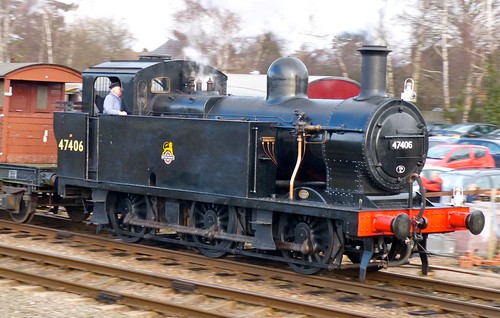
LMS 3F 0-6-0T No.47406


Was one of a batch of 35 loco’s built by the Vulcan Foundry

for the LMS in 1926.


Based on a Midland Railway design that dates back to 1889. Over 420 ‘Jinties’ as they were known were produced for the LMS between 1924 and 1931.


47406 was one of 9 Jinties ln ‘Woodhams’ scrapyard and was the last to leave as recently as 1983 for preservation on the GCR.

P1080568


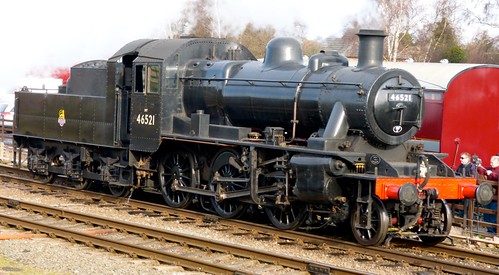
LMS Ivatt class 2 2-6-0 No. 46521


One of a batch of 13 loco’s built at Swindon in 1953. Derived from Ivatt’s 2-6-2T tank loco, the addition of the tender with its greater carrying capacity for both coal and water gave the loco a greater radius of operation.


On the Saturday, 46521 was used on the turntable demonstration and here it is seen on its way to and from the demo.
 

P1080548


P1080612

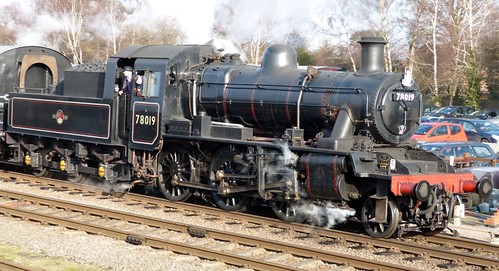
BR standard class 2 2-6-0 No. 78019 

Is visually a close relative of the Ivatt 2-6-0. 65 of this class which were derived from their Ivatt forebears differed only in detail. 


The build dates for this class are shown as 1952 to 1954 which is interesting in that when the BR loco’s were in build in 1952 that their LMS forerunners were still being built until 1953.


78019 built at Darlington was another loco rescued from ‘Woodhams’ yard at Barry. After being ‘parked’ on the Severn Valley railway it came to the GCR in 1998.

P1080581


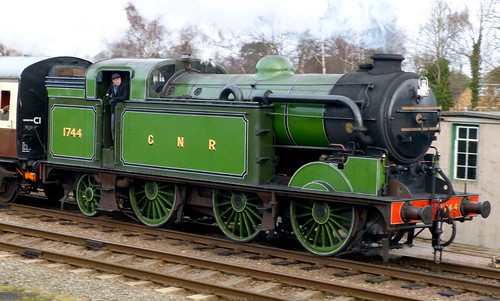
Two loco’s in green paint albeit in different shades.


Great Northern Railway (GNR) N2 class 0-6-2T No. 1744 currently in Apple green.


Designed by Nigel Gresley for the GNR and introduced in 1920. the class were mainly used on suburban duties out of Kings Cross. They would have been seen hauling sets of articulated coaches.


They performed similar duties around Edinburgh and Glasgow.


Their hauling capacity is put to good use on the well loaded GCR trains.


1744 became an LNER loco at the grouping and later entered BR service as No. 69523.

P1080597


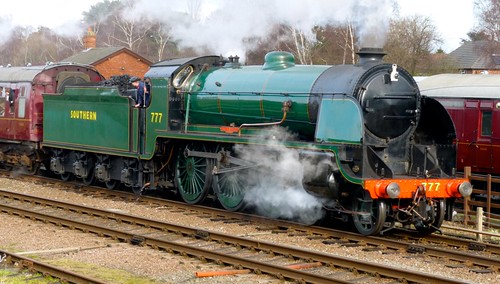
Southern Railway (SR) N15 ‘King Arthur ‘class ‘Sir Lamiel’ 4-6-0 No. 777 currently in Malachite green.


All the loco’s in this class carried names from the fictional ‘Knights of the Round Table’.


Built in 1925 by the North British Locomotive Company in 1925. It was withdrawn from service in 1961 and although resident at the GCR it is part of the National Collection.


It too became part of BR stock as No. 30777.

P1080528


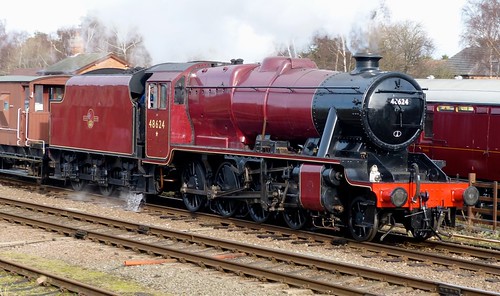
LMS Stanier class 8F 2-8-0 No. 48624. 


Another wearing loco carrying a livery that is not authentic to its class and as with the 9F in some quarters a contentious choice. 


As far as I know, no 8F’s carried the LMS express passenger livery but I think that it sits very well on the loco and is a pleasant change from plain black that adorns the other members of this class in preservation.


One of 852 built by or for the LMS or War Department between 1935 and 1946 as heavy freight loco’s. 48624 is the only surviving Southern Railway built loco having been built at Ashford in 1943 and is one of 14 survivors.


The class were used extensively in Europe and the Middle East.


Numbered 8624 in LMS days, currently it carries its BR number 48624 on its LMS livery.

P1080537


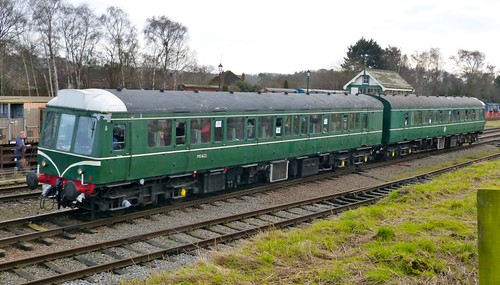
I have never visited a steam gala at the GCR when by way of contrast, a DMU has not turned up. This time was no exception.


We were treated to several runs by this BR class 127 which first came to the GCR in the 1980’s. Its 2 power cars have Rolls-Royce engines which sound lovely.


The standard of restoration is first class and although it was at a steam gala it attracted a considerable amount of attention.

P1080508


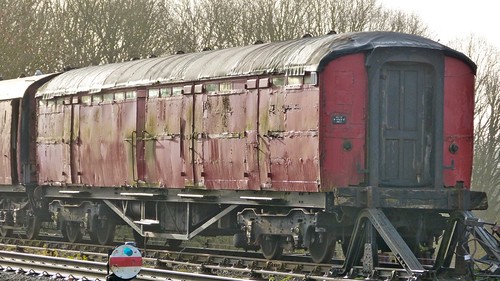
On the question of quality of restoration, I would offer the two following images which could be titled before and after.


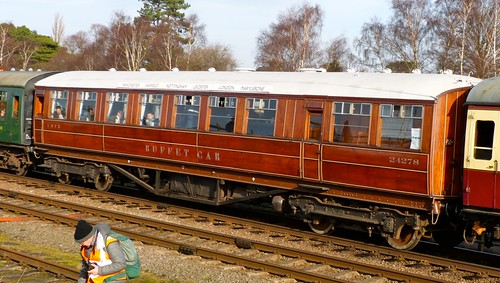
Both are Gresley LNER teak stock. One has a long way to go, the other, superb. 


Well done.

P1080489


P1080584

Saturday, 19 October 2013

'Scene' in Carlisle part one, Trains

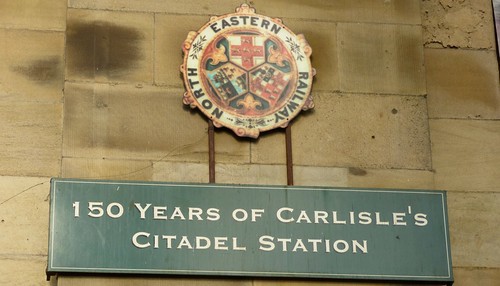
Carlisle Citadel Station


In its heyday Carlisle Citadel Station (known these days as simply Carlisle) welcomed trains from the following railways. The  Midland, the Caledonian, the North Eastern, the London & North Western, the Maryport & Carlisle and the Glasgow & Southwestern.


It must have been a colourful and noisy scene.

P1060394


P1060249


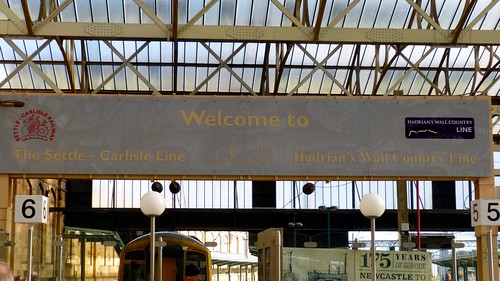
Today it is still busy and proudly displays its place as the Northern terminus of the Settle and Carlisle line. This being regarded as one of the most scenic railway lines in the country.
 

P1060395


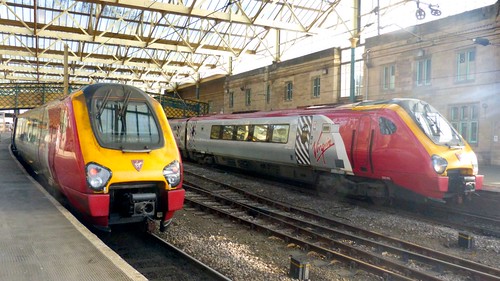
A pair of Virgin Voyagers (221109 & 221111) at the Northern end of the station heading in opposite directions.


P1060413


It is not surprising that many of the loco’s seen in and around Carlisle are owned by  ‘Direct Rail Services’ (DRS) because although they have depots around the country the company is headquartered in Carlisle.


DRS is wholly owned by the Nuclear Decommissioning Agency and was established in 1995.  


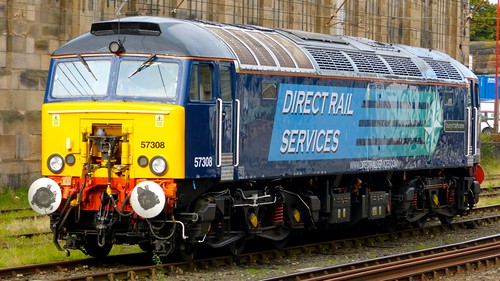
57308 

Named ‘County of Staffordshire’ of (DRS) waits its next duty.


At one time 57308 worked for Virgin Trains as one of its ‘Thunderbird’ locos and at that time carried the name ‘Tin Tin’.


They were used as rescue loco’s on the West Coast Main Line and also for hauling diesel units from Crewe to Holyhead and return.


P1060250


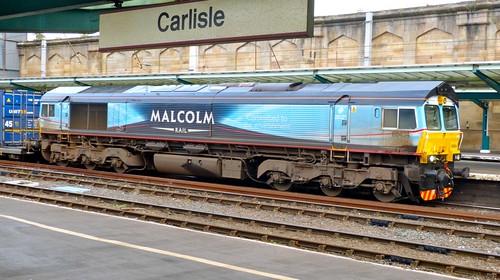
66434

Another DRS loco carrying the livery of 'Malcolm Rail' passes through on a Southbound freight. Most class 66 with DRS have come direct from General Motors but this one of five purchased secondhand from the defunct operator ‘Fastline Freight’. 


P1060255


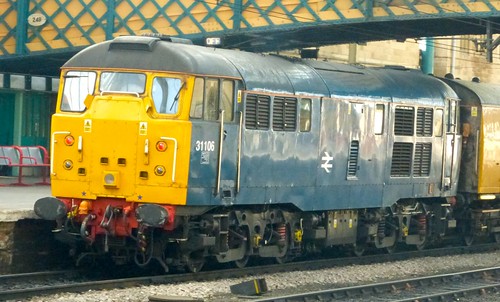
31106

Known as Brush type 2’s when originally built in the late 1950’s and early 1960’s. Originally numbered as D5224, at various times it has carried the names ‘The Blackcountryman’ and ‘Spalding Town’.

Now simply 31106 it is seen propelling a Network Rail test train.


P1060393


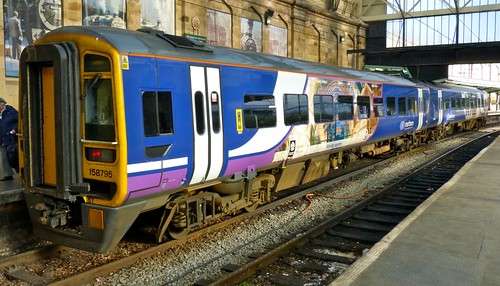
Most passenger trains these days are made up are made up of multiple unit stock and here are a few that were present.


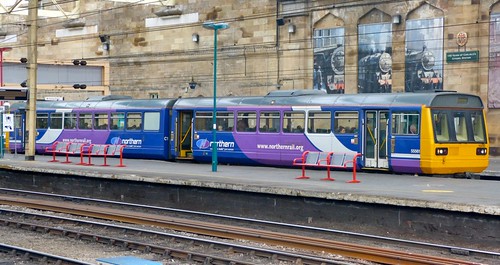
158795

In the colours of ‘Northern Rail’ had just arrived from Leeds. It had worked over the Settle and Carlisle line in bright sunny conditions. I had been a passenger on this from Settle.


P1060390


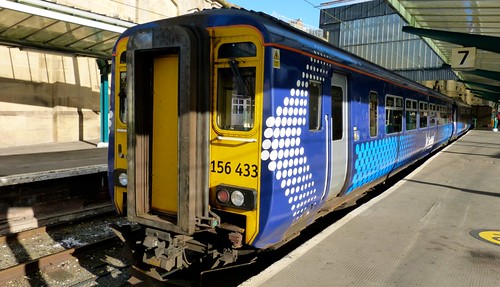
156433

One of ‘Scotrails’ fleet of 156’s. 

There have been a number of ‘Scotrail’ liveries over the years but I think that this is the best.


P1060396


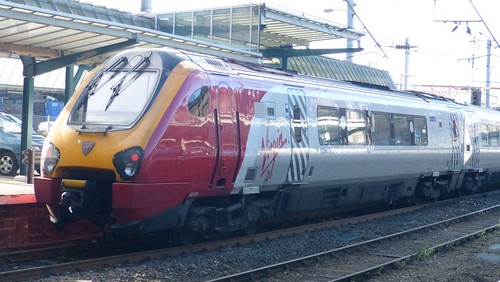
221111

The trailing car on this Virgin Voyager set heads North over the border.

I find it strange that these diesel sets operate considerable mileage ‘under the wires’.

Surely bi-modal stock has to be the answer.


P1060416


142020

One of the much derided Class 142 fleet. I personally like them and I think a lot of their so called rough riding characteristics come from running on old fashioned short lengths of track held together with fishplates. On welded track, I think that they are acceptable. 


P1060251


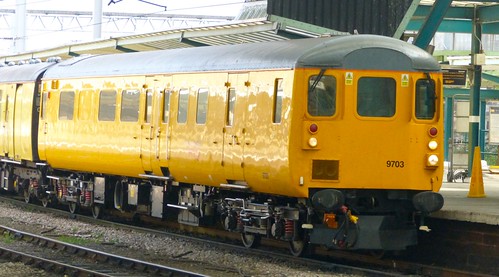
9703

Built as a Brake Standard Open (BSO) at Derby in 1974. It was one of 14 converted to Driving Break standard Open (DBSO) to enable it to work in push pull mode with a loco on the rear of the train. Part of ‘Network Rail’s fleet.


P1060391


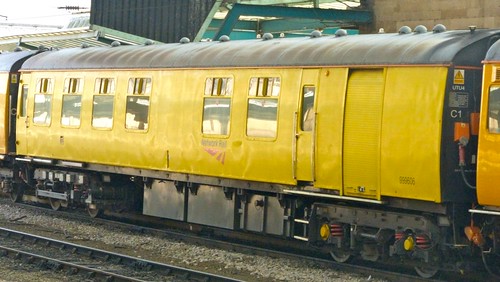
999606

A former British Railways built Mark 1 coach now used for ultrasonic testing purposes. Part of ‘Network Rail’s fleet.


P1060392


Further photos can be seen on my Flickr 

Thursday, 15 August 2013

The Steeple Grange Light Railway


An evening visit to

The Steeple Grange Light Railway (SGLR)

P1040902


I was fortunate recently to be able to attend a ‘Transpire’ (The Chesterfield Bus Society) 
visit organized by Shayne Howarth to the SGLR.


The railway is located on the outskirts of Wirksworth in Derbyshire and alongside the High Peak Trail to which there is direct access.


Living locally, I decided to forego going to Chesterfield for the bus ride there. I immediately regretted my decision when I saw the groups choice of transport.


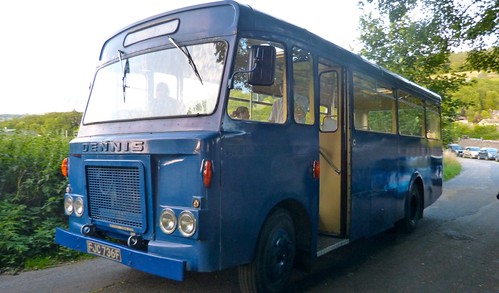
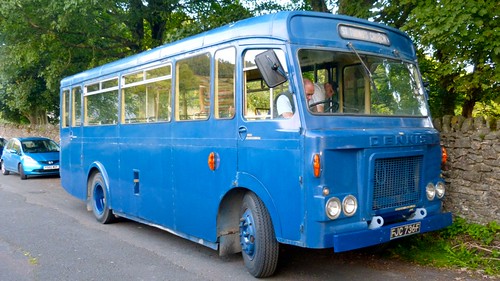
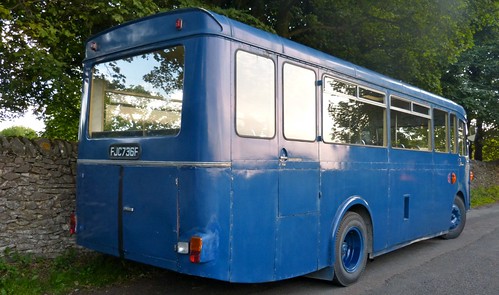
This turned out to be FJC 736F. One of only two Dennis Pax buses specially built for Llandudno UDC in 1968 and I think the only one to survive. They were for services up the Great Orme and to St. Tudno’s church. 


They replaced two Fodens with Metalcraft bodies built in 1951 


P1040938


I apologise for the poor quality of this image but I had a choice between this and getting run over !!!


I have perhaps gone overboard with the images of the bus but I have done so because of its rarity.


It also brings back memories of riding on it in Llandudno in 1968 or ’69 when it the had a cream top half to go with the blue lower half.

P1040940

P1040941


The SGLR is built to a gauge of 1 foot 6 inches and runs on the trackbed of what was a standard gauge line running from the Steeple House Junction on The Cromford and High Peak Railway up what is known as the ‘Killers’ branch. The name derives from the brothers who owned it and not to anything more sinister.


The C&HPR line dates from 1830 when horses provided the traction whilst the SGLR dates from 1985.


A lot of the loco’s and rolling stock come from an industrial background, most having worked in quarries, mines and factories etc.

P1040933


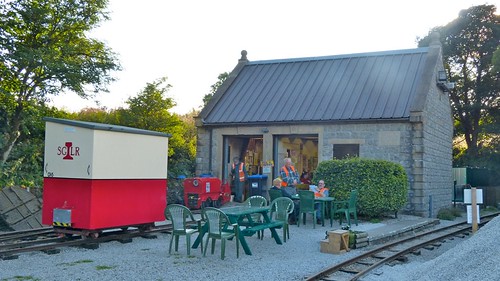
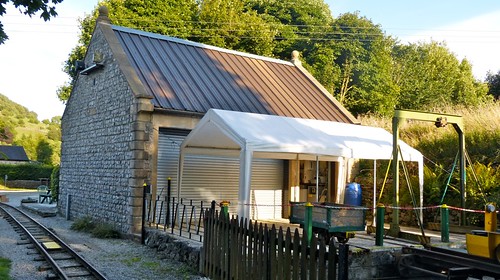
The ‘centre’ of operations is this sturdily built stone engine house which provides cover and accomodation for some of the loco’s and their crews.


P1040912

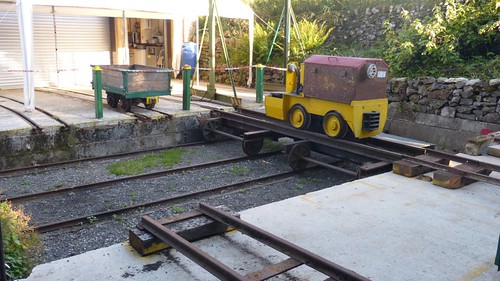
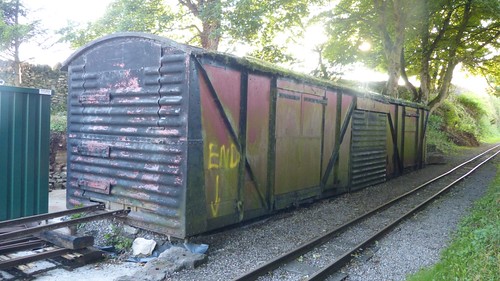
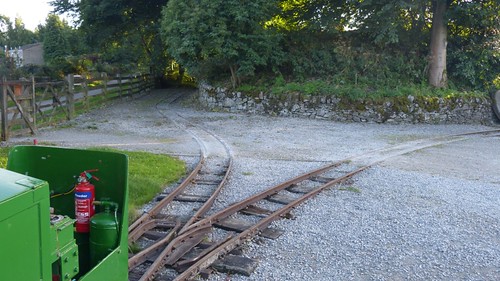
To the rear is a paved area with a heavy duty hoist and access to the right of the image to a two track traverser which allows loco’s to be securely stored in a modern container in what appropriately were old standard gauge railway vans.


P1040909


P1040911


 There were two trains in service.


The first of which took the members assembled up the branch in the direction of Middleton to its current end at a little over half a mile distant.


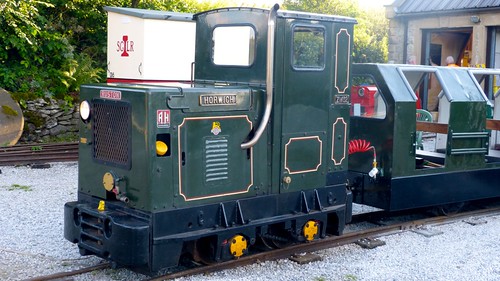
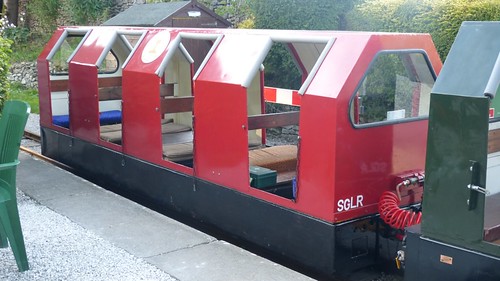
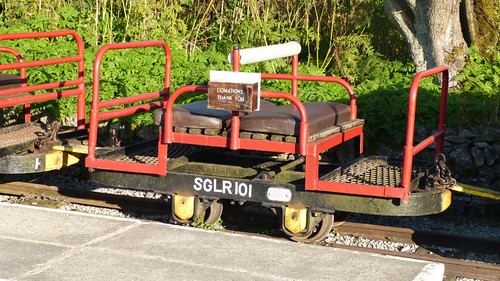
This comprised this Ruston and Hornsby built 4 wheel diesel loco dating from 1957 coupled to two former NCB ‘manriders; which came from Bevercotes colliery in Nottinghamshire. The ‘manriders’ were originally built to a gauge of 2 feet 3 inches so they both needed to be re-gauged.


P1040900


 The Ruston, named ‘Horwich’ was built for and named after the British Railways works in Lancashire where it worked. It then resided in a museum at Blaenau Ffestiniog from where it was purchased in 1997. 


P1040898


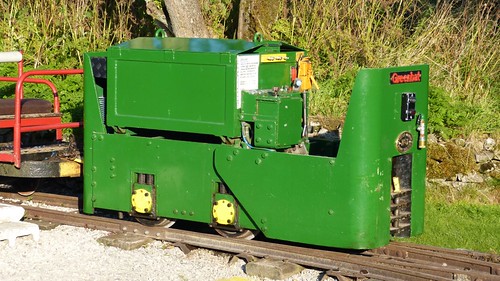
The second which runs to the Steeple house quarry was comprised of two four seat ‘manriders’ hauled by ‘Greenbat’.

The manriders came from the Ladywash Mine at Eyam in Derbyshire.

P1040892

 Greenbat was built in 1960 by Greenwood and Batley and is a 5 H.P. battery electric that spent most of its earlier working life in factories.


P1040893


 Here we can see ‘Greenbat about to take the branch off to the left to Steeple house quarry. The quarry has been designated as a ‘Site of Special Scientific Interest (SSSI) because of the fossils dating back millions of years that can be seen.


P1040927


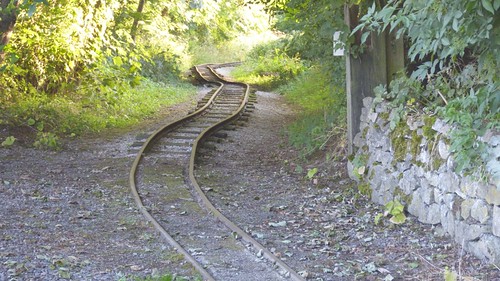
 The track as it wends its way through the woods in typically delightful narrow gauge style.


P1040924


 The end of the line in the quarry. If the first barrier fails to stop you, the second one certainly will.


P1040922


P1040942


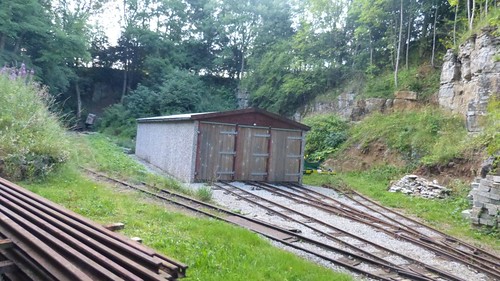
As the main line ascends towards its present terminus on the way to Middleton, it passes what is known as Dark quarry where the railway has built a shed which accomodates various items of rolling stock.


P1040918


And finally, a footnote (sorry about that). 


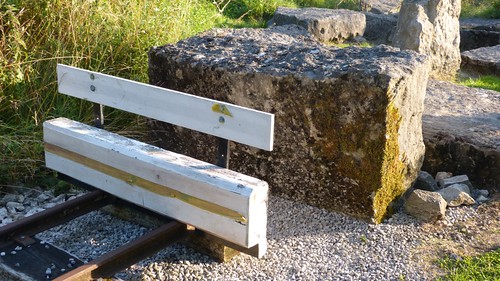
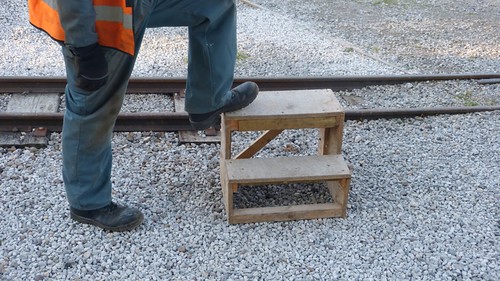
Is this the shortest temporary platform on any UK railway ??


Conclusions then. 


A excellent outing made even better by the very obliging and welcoming ‘crew’ at the SGLR. 


Combined with perhaps a visit to the Ecclesbourne Valley Railway and/or the nearby National Stone Centre it would make a good day out for those who have to travel further than I did.


Further images of the SGLR are here  Flickr 


Friday, 2 August 2013

THE WELSHPOOL AND LLANFAIR LIGHT RAILWAY (WLLR) Part 7 of 8

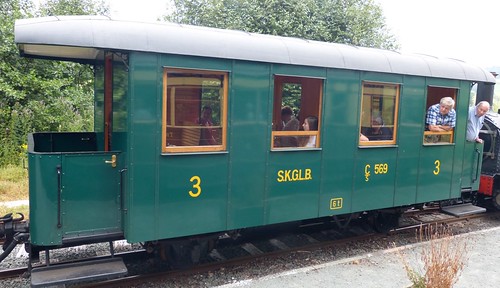
Another import from the ZB was this newer steel bodied coach again built by WMFAG at Graz in 1925.


P1030927


A 4 wheel second open, It was built for the Salzkammergut Lokalbahn (SKGLB). in Austria and is finished in SKGLB livery as its No. C569.


Initially running on the WLLR in the ZB livery of red and cream and numbered B24.

THE WELSHPOOL AND LLANFAIR LIGHT RAILWAY (WLLR) Part 5 of 8

When the line opened, the coaching stock was built by  R.Y. Pickering of Wishaw near Glasgow.


These are long gone having been scrapped when the passenger service terminated in 1931. 

P1030949

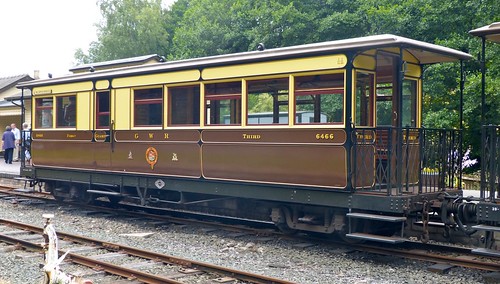
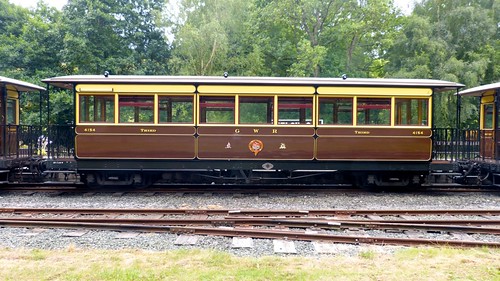
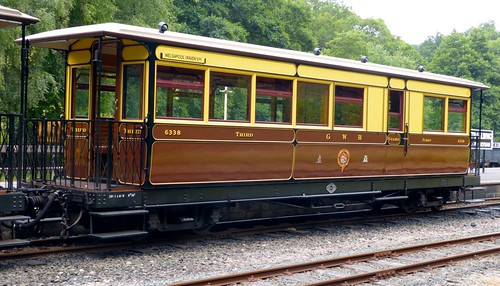
Fortunately the WLLR was able to commission the building of three replica coaches.


These came from the Boston Lodge works of the Ffestiniog Railway earlier this century and are finished in GWR coaching stock livery.


There are two First/ Thirds, numbers 6466 and 6338 and a Full Third number 4154.

P1030948

The standard of finish on these coaches is superb and I can say that in many years of railway interest, they are the best I have ever seen.

P1030947

THE WELSHPOOL AND LLANFAIR LIGHT RAILWAY (WLLR) Part 3 0f 8

P1030867

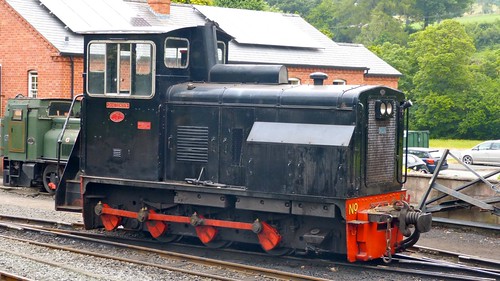
There is a small fleet of diesel’s that support the steam fleet.

 No.7 ‘Chattenden’ an 0-6-0 DM with jackshaft drive was built in 1947 by E.E Baguley Ltd. for the Drewry Car Company and at one time worked for the Admiralty. It was sold to the Chattenden and Upnor Railway before coming to the WLLR in 1968. 

It has recently been re-built to a new dual braked standard.


P1030869


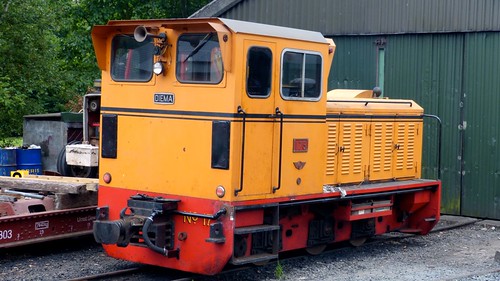
No. 17. another 0-6-0DM was built by the Diepholzer Maschinenfabrik (Diema) in 1979 for the Taiwan Sugar Corporation. It arrived on the WLLR in 2004


P1030868


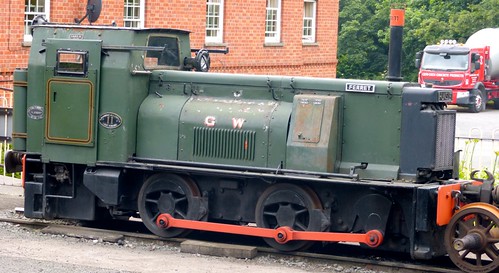
No 11 named ‘Ferret’ was built by The Hunslet Engine Company as works number 2251 in 1940.

Again it saw service with the Admiralty before coming to the WLLR in 1971. It currently wears lined GWR green loco livery.