Showing posts with label Heritage Railways. Show all posts

Thursday, 2 October 2014

‘Scene’ on the North Norfolk Railway (NNR)

I recently had a day out on the North Norfolk Railway (NNR) which runs from Sheringham via Weybourne to Holt. The day was a father’s day outing paid for by my son Andrew and his wife Joy.


We got there by way of ‘East Midland Trains’ from Nottingham to Norwich and then by ‘abellio-greateranglia’ to Sheringham.


Its pleasing to see that the NNR uses the ‘British Railways’ signage from the 1950’s which is entirely in keeping with a ‘Heritage Railway’.
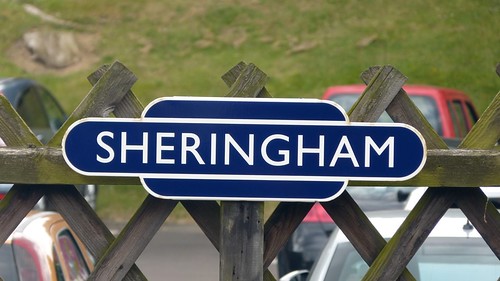

P1130869


There is a direct link with the rest of the railway network to the East. Beyond the level crossing is the start of the line that runs through to Norwich.
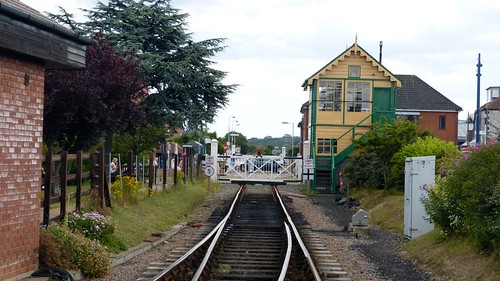
 

P1130871


While to the West the line runs parallel to the coast as far as Weybourne and then swings slightly inland to terminate at Holt.
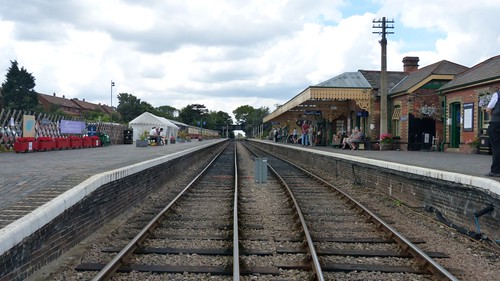
 

P1130873


The ‘NNR’ is what remains of the ‘Midland & Great Northern Joint Railway’ (M&GNR) which prior to largely being axed in the 1960’s served a wide network across North Norfolk.


From the grouping of 1923 the ‘M&GNR’ which itself was an amalgamation of many smaller lines dating from 1893 became part of the LNER. Today the major rolling stock on the line reflect that companies ownership.


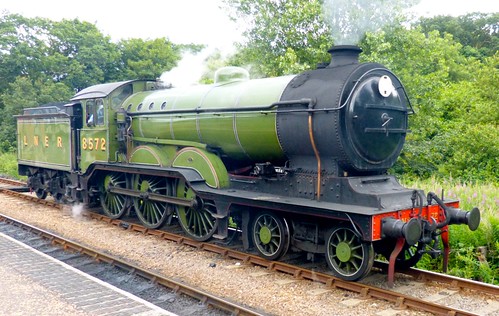
There were two loco’s in steam on the day. Resplendent in LNER Apple Green was No. 8572. A B12 class loco built in 1928 to an earlier Great Eastern Railway design.
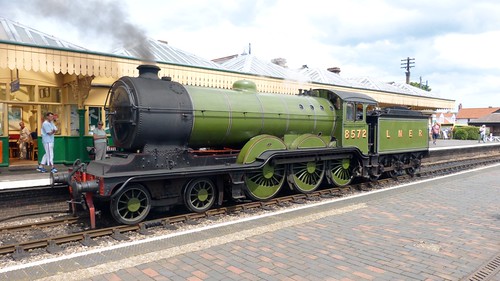
 

P1130886


P1130919


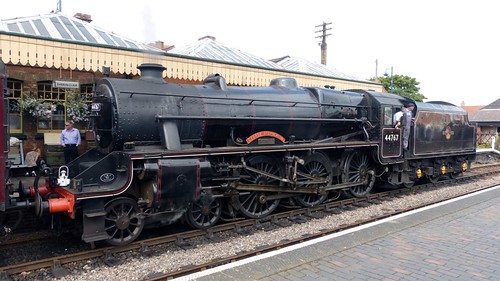
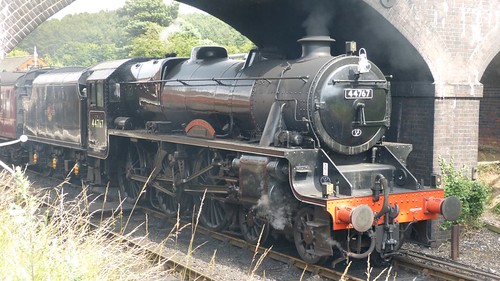
and British Railways (BR) No. 44767 George Stephenson. An LMS Stanier ‘Black Five’ which is unique in that it was the only one in a class of 842 locomotives built to be fitted with the ‘Stephenson’ type of valve gear.


It’s other claim to fame being that it was completed on the 31st of December 1947 so being the last loco to be finished for the LMS and on the following day, the LMS became part of ‘BR’.
P1130985


P1130948


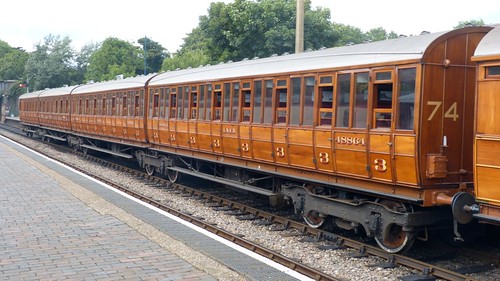
The main purpose of the visit was to see and ride on the Gresley ‘Quad-art’ coaching stock  that is the jewel in the ‘NNR’s crown. 


I first saw this at Weybourne 40 years ago when it was in a run down condition. At that time I seriously doubted that it would ever run again. Now and half a million pounds later, it looks magnificent.

P1130877


 The ‘Quadruple-Articulated’ principle was the work of Nigel Gresley (before he became Sir) when he was the Great Northern Railway’s (GNR) Carriage and Wagon Superintendent.


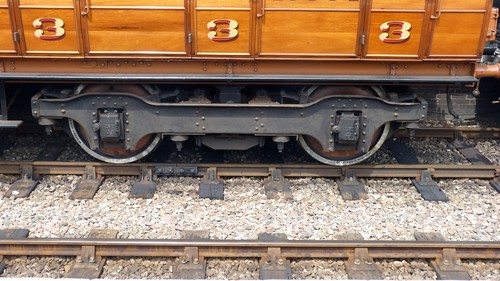
Initially converted from older coaches and then as new build stock they were an exercise in reducing cost. ie Five bogies in four coaches instead of eight. 


As a consequence it reduced the weight and also kept the overall length to reasonable proportions for use in some of the more cramped stations such as Moorgate.


The articulated principle is still in use today. The Eurostar trains being prime examples.


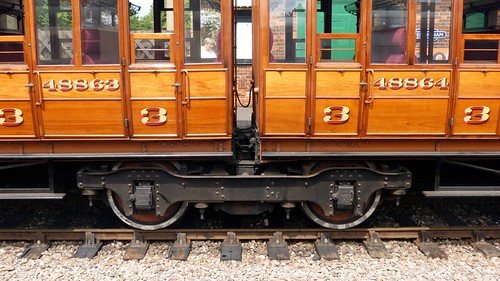
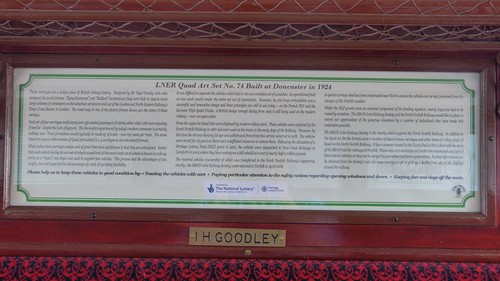
The set now on the NNR were built as set No. 74 in 1924 by the LNER. Continuing in service with ‘BR’ it was withdrawn in 1966.


Initially destined to be scrapped, it was stored and eventually came to the ‘NNR’ where it became the lines early coaching stock.


Withdrawn again in 1979 because of its poor condition, it was stored for over 20 years before it was decided to restore it. The restoration which was undertaken at Carnforth starting in 2003 took five years to complete.


P1130878


P1130880


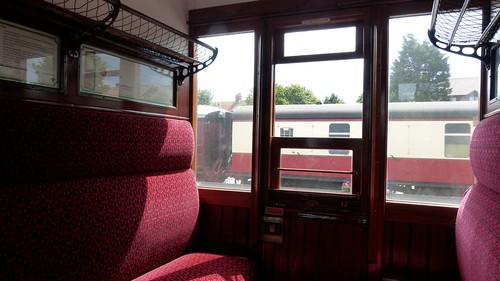
As well as the exterior, the interior was restored to the same standard.

P1130895


The full story can be read on the information boards on display in the coaches.

P1130899


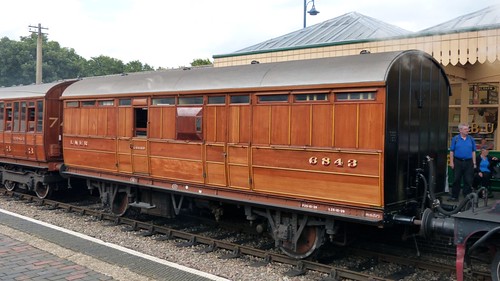
The NNR attracts a lot of cyclists and for carrying their cycles provides this former LNER Pigeon Van is provided.

P1130875


The line leaves Sheringham and runs across the top of the cliffs with extensive seaward views to the intermediate station at Weybourne.
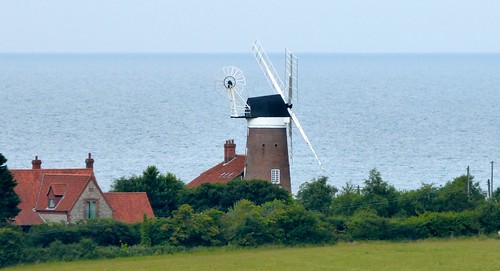

P1130943


This is where the lines workshops and storage is located.

P1130952


The view from the footbridge looking East towards Sheringham.
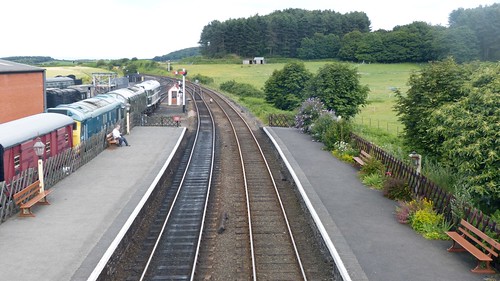

P1130960


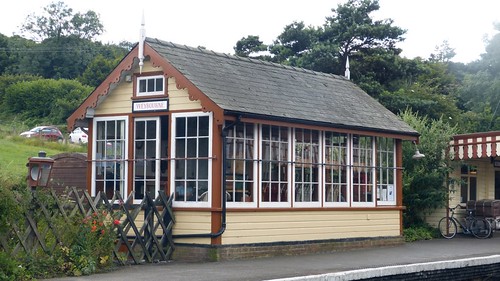
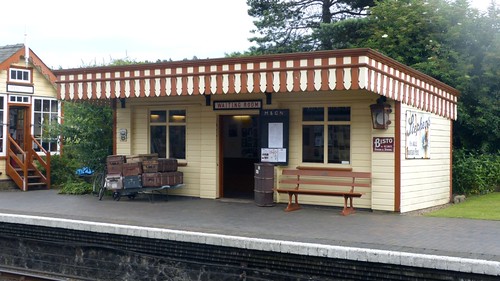
The view from the footbridge looking West towards Holt. The brick built station buildings to the right is faced by the timber built signal box and waiting room opposite.


The buildings are painted in a tan and cream colour scheme which matches the livery in which the M&GR loco’s were painted.
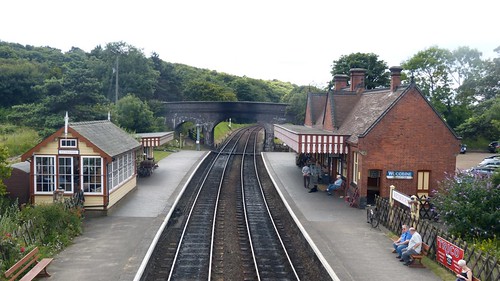
P1130959


P1130951


P1130957


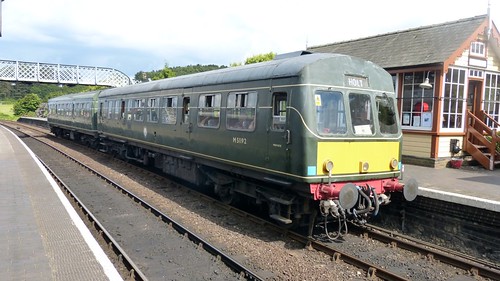
For the last service of the day, this Metro-Cammell built Class 101 DMU was substituted for the B12/Quad art train.

P1130965

D5631 

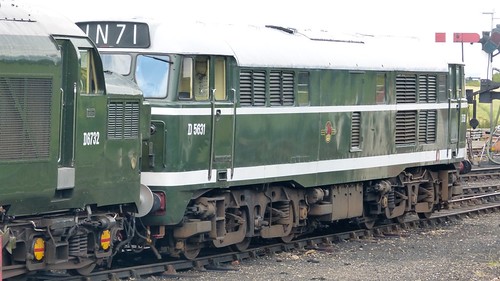
Formerly Class 31 207 was parked up at Weybourne. Built by Brush at Loughborough in 1960 and withdrawn in 2001. Owned by the M&GNR Society who have chosen to paint the loco in the livery it wore when first built.


P1130961


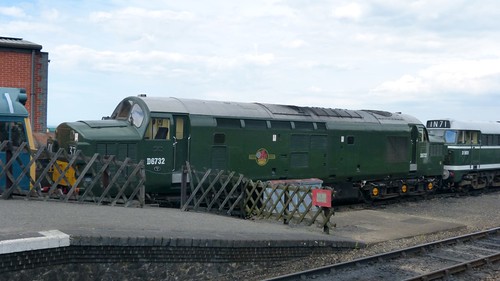
As was Class 37 D6732 formerly 37032. Built by English Electric at Newton-le-Willows in 1962.

P1130962


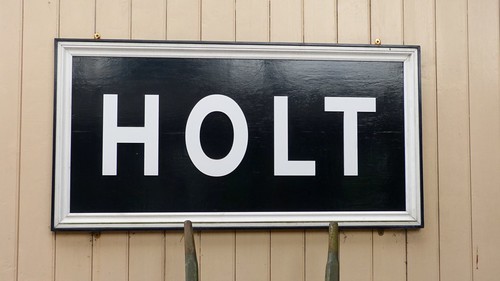
 Holt is the end of the line where there is the usual run round loop together with a small goods shed.
 

P1130935


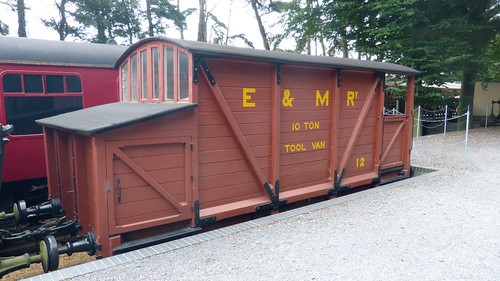
Parked at Holt is a small selection of wagons of which No. 12, a tool and brake van is probably the pick. Built by the M&GNR, it has been splendidly restored.

P1130903


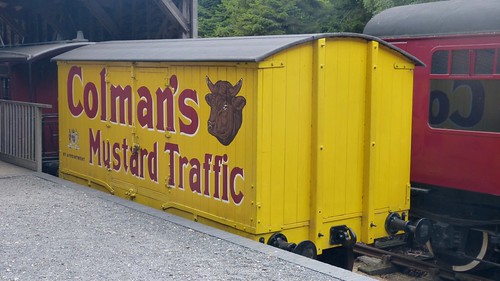
Another original is this van built for the mustard traffic which is grown widely in Norfolk.

P1130907


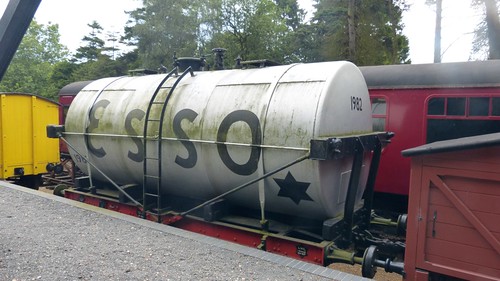
Sandwiched between the two is this ‘ESSO’ tanker.

P1130906


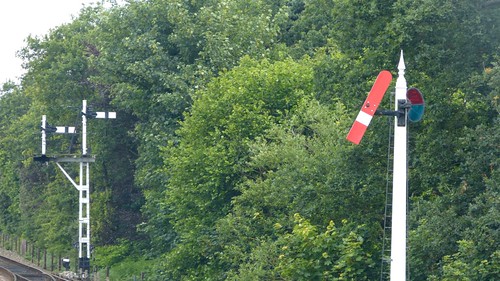
Another link with the past is the signal seen here on the right located at Holt being of the  Great Northern Railway ‘somersault’ type.

P1130911


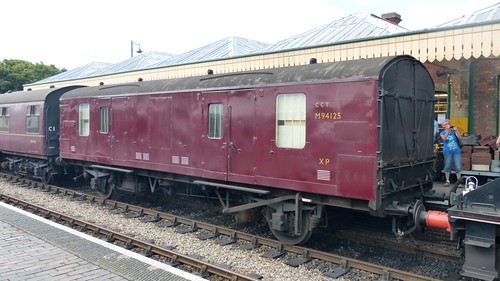
On the second train in service the cycles are accommodated in this former British Railways Covered Carriage Truck.
 

P1130983


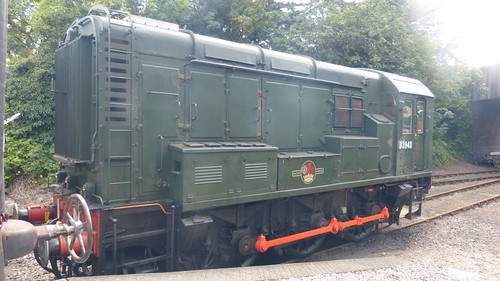
The obligatory Class 08 shunter at Sheringham is D3940 (which was formerly 08772). Built at Derby in 1960 and withdrawn in 1994.

P1130988


Friday, 15 August 2014

‘Scene’ on the rails in Bury

Bury is a very interesting place for transport enthusiasts not only because of its bus station (see my earlier ‘blog’ dated 09/08/2014) which forms part of Bury Interchange and also includes the terminus of the Tramway line.


The tramway runs largely on the trackbed of the old railway line that started at Manchester Victoria and now involves street running in the city itself.


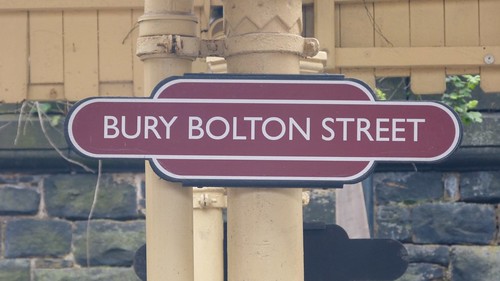
If that is not enough, there is also the preserved ‘East Lancashire Railway’ (ELR) that runs North to Rawtenstall and Ramsbottom. This being based at Bolton Street station which is barely 5 minutes walk from the Interchange.


P1110652


The view from the platform end which shows how either of the 2 platforms can be accessed from both the running rails.


P1110665


The first generation of modern trams were Italian built Ansaldo Firema T-68/T-69‘s. Dating from the early 1990’s They have now all been withdrawn.


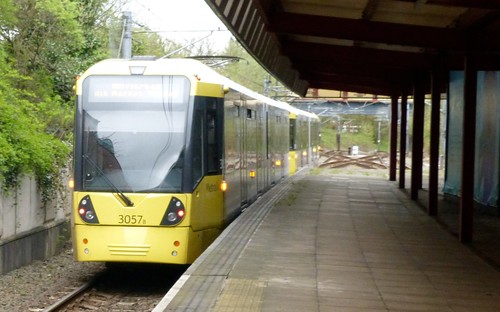
‘Metrolink’ the operator have replaced them with new Bombardier ‘Flexity Swift 5000’ ‘Light Rail Vehicles’ (trams to you and me).


84 units have been delivered and another 32 have been authorised to be delivered up to 2016. Costing £2,000,000 each they are fast, powerful and comfortable. 


But then there are also trains, buses.............!


Both platforms are in use and here car No. 3057 is seen departing whilst car No. 3020 waits for departure time.It


carries the name ‘Lancashire Fusiliers’ an apt name considering that 2014 is the centenary of the outbreak of the First World War in which the regiment like many others suffered badly.


P1110662


P1110668


P1110669


The ‘ELR’ has a history dating back to 1859 when a company of that name operated from 1844 until 1859 running over much of the route that today’s ‘ELR’ covers.


After an acrimonious relationship with the ‘Lancashire & Yorkshire Railway (L&YR) the ‘ELR’ was absorbed by the ‘L&YR’ in 1859.


Ownership then continued through the ‘LMS’ and on to ‘British Railways’ who finally closed the line down in the 1980’s.


The modern ‘ELR’, a heritage railway opened in 1987.


Today, the line is one of the UK’s premier preserved railways.


P1110678


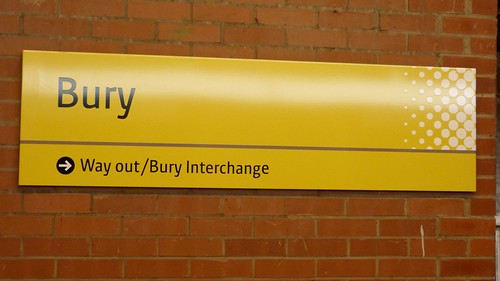
After the modernity of the tramway, it is like stepping back in time. It is pleasing to see the use of 1950's vintage signage.


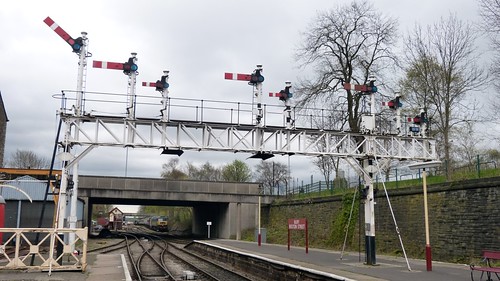
Just look at this marvelous signal gantry controlling the approach from the South.


P1110682


This handsome structure on platform 2 provides a tea room/cafe and shelter in poor weather conditions.


P1110730


Heading North from Bury trains run via Summerseat to Ramsbottom and Rawtenstall.


On view on the day were,


No. 61994 The Great Marquess


Designed by Sir Nigel Gresley and built as a K4 class loco in 1938 by the LNER and numbered 3442 in service. The class was 6 loco’s strong.


The K4’s were designed specifically for the West Highland Line to Mallaig and Fort William.


Withdrawn in 1961 and sold into preservation it was stored on the Severn Valley Railway from 1972 until 1980 when it was overhauled.


Sold in the mid 2000 it was then overhauled at Crewe. It has since moved back to Scotland where it operates trains on the national rail network.


P1110765


D1501


Built by Brush Traction in 1962 being powered by a Sulzer 12LDA28-C engine. Under the TOPS numbering system it became 47402. 


It was unusual in that it was fitted with both steam and electric train heating capability from new and also the Westinghouse braking system.


Withdrawn in 1992 in BR blue livery, it entered preservation in 1993 being repainted into its original livery in 2010.


Withdrawn in 2001, the loco was overhauled and re-entered service in 2005.


P1110683


D9531


Built by British Railways (BR) at Swindon in 1965 as one of its Class 14. A Diesel Hydraulic locomotive, a type of transmission that at that time was in favour with 'BR’s Western Region.


Sold out of service D9531 arrived at the ‘ELR’ in 1987 in the National Coal Board’s dark blue livery.


Withdrawn at the ‘ELR’ in 1997, the loco was subject to an overhaul that lasted 15 years after which it ran temporarily as D9556 to emphasize that it was effectively a brand new loco. The original production run of 55 loco’s had been numbered D9500-9555. 


The 'ELR' has only recently hosted an event to celebrate 50 years of the Class 14 with 10 of the loco's in preservation being in attendance. 


11506 (D2956)


Pictured in an anonymous black livery, this loco was one of 5 produced for British Railways by Andrew Barclay and Sons of Kilmarnock. The first four were numbered 11503-11506. They then became D2953-D2956. The fifth which was produced for departmental stock work as No. 81 was re-numbered to D2956 when the original loco was withdrawn.


Two loco’s survived (‘54 and ‘55) to become BR Class 01 001 and 01 002. They were withdrawn in 1979 and 1981 respectively and cut up.


P1110696


P1110698


W56289


A Class 121 Driving Trailer having arrived at Bury. Built by the Pressed Steel Company in 1960 to lot number 30519.


Working with another Pressed Steel set this time a 2 car DMU Class 117 numbered DMBS 51339 and DMS 51382 built in 1960.


P1110732


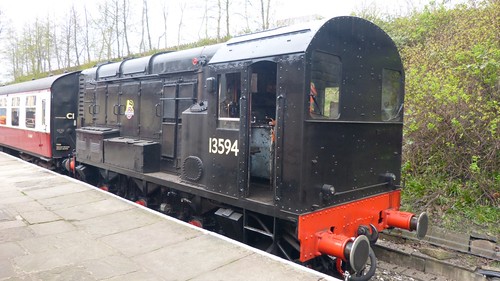
13594


Every preserved railway seems to have on 08 shunter on strength and the ‘ELR’ is no exception. Its TOPS number was 08479.


Built by British Railways at nearby Horwich works in 1958. Powered by an English Electric 6KT engine.


P1110743


RNAD 167


This quaint little reduced height van which stands at Bury was used for carrying ammunition by its previous owner the Royal Navy.


P1110711


Saturday, 12 July 2014

‘Scene’ at Sheringham

I recently had a day out on the North Norfolk Railway (NNR) which runs from Sheringham via Weybourne to Holt. (A further ‘blog’ will appear in due course). The day was a father’s day outing paid for by my son Andrew and his wife Joy.


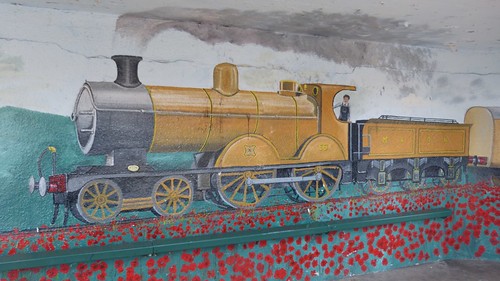
The roadway outside the ‘NNR’s station is where the local buses start their journeys and it is there that a bus shelter which is decorated with the mural seen below is located.


It depicts a ‘Midland and Great Northern Joint Railway’ 4-4-0 locomotive No. 55 and a coach both painted in what was the ‘M&GNJR’s golden ochre livery.


The ‘M&GNJR’ was one of many small railways located in the East of England which eventually went into making up the LNER.


P1140008


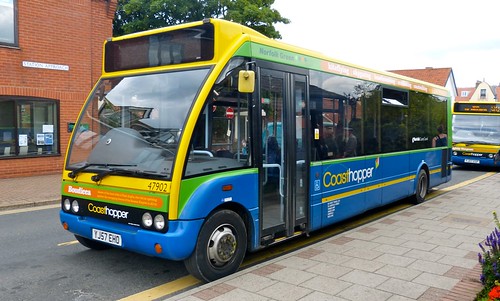
YJ57 EHO


An Optare Solo of ‘Norfolk Green’ (NG) carrying the ‘Coasthopper’ livery. The ‘Coasthopper’ runs from Kings Lynn in the West to Cromer in the East and should you care to do the full journey, it would take about two and a half hours to do so.


‘NG’ were taken over by ‘Stagecoach’ (SC) in late 2013 and unusually, the buses acquired have not been painted into ‘SC’ livery. The decision to retain the ‘NG’ livery being underlined recently by the delivery of standard ‘SC’ vehicles painted in ‘SC’s livery style albeit in ‘NG’ colours.


P1130865


Another ‘big group’ operator in the area is ‘konectbus’ now a member of the ‘Go-Ahead’ (GA) group.


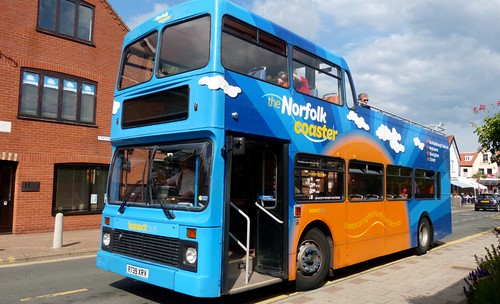
R739 XRV


Their contribution to the day was this Volvo Olympian/Northern Counties bodied part open topper that the driver very kindly positioned for me so that I could get this shot.


The bus appears in the full livery that it ran in when it was part of the Southern Vectis’ (SV) fleet on the Isle of Wight (IoW). ‘SV’ being another ‘GA’ group member. 


The branding on the bus has obviously been changed to reflect its current workplace. 


I have ridden on it on the ‘IoW’ in the past and it is nice to see it looking as well as it does.


P1130995


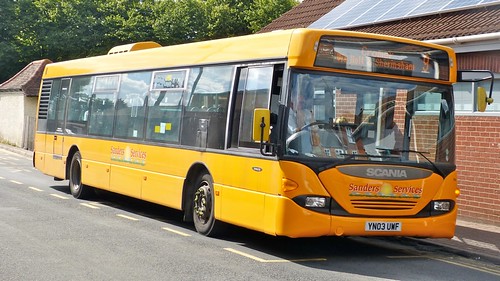
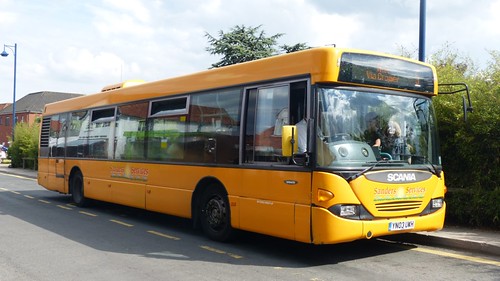
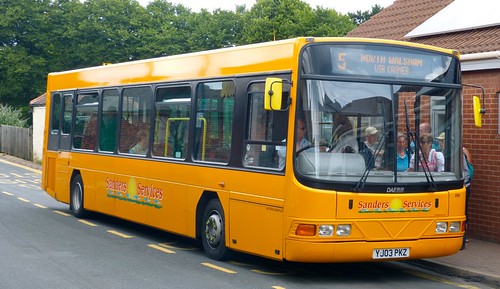
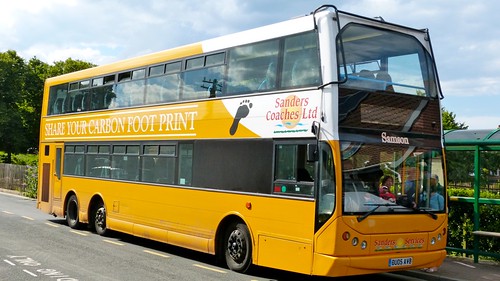
 Local operator’ Sanders Services’ of Holt were represented by,


 YN03 UWF and YN03 UWH a couple of Scania CN94UB Omnicities.


P1140005


P1130993


YJ03 PKZ


A Wright Cadet bodied DAF SB120 which was until recently with ‘Neaves Coaches’ of Catfield.


P1130868


OU05 AVB


A Volvo B9TL with East Lancs Myllenium Nordic bodywork. Previously operated by ‘Weavaway’ of Newbury.


A magnificent bus....!


P1140007


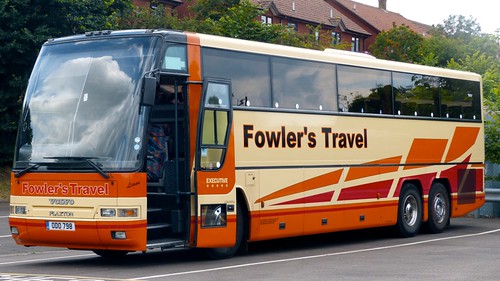
ODO 798


Visitng for the day was a Volvo B12R with Plaxton bodywork. Operated by ‘Fowlers Travel’.


The legal titling gives the address as Holbeach Drove and I must confess it has fascinated me what or where Holbeach Drove is since I first saw it mentioned in ‘Buses Illustrated’ many years ago.


The registration is cherished by ‘Fowler’s because it has appeared on a number of the companies vehicles in the past.


P1130997